Mold Isn’t the Problem—Moisture Is: 7 Signs of Moisture Intrusion in Central PA Homes (and What to Do)
Mold Isn’t the Problem—Moisture Is: 7 Signs of Moisture Intrusion in Central PA Homes (and What to Do)
-2025
TL;DR
Most “mold problems” start as moisture problems—leaks, condensation, poor drainage, or humid basements/crawlspaces. If you see stains, bubbling paint, musty odors, recurring condensation, or damp foundation walls, don’t just clean the surface. Find the moisture source first, dry the area, and correct the cause to prevent regrowth.
Key takeaways
Mold is often a symptom. Moisture is the root cause.
The most common sources are roof/flashings, plumbing, gutters/downspouts, grading, and condensation.
Quick cleanup can help, but if moisture continues, the problem returns.
Moisture is the problem; Mold is the result.
If you’ve ever walked into a basement and thought, “Why does it smell like that?”—you’re not alone.
In Central PA, moisture issues show up all the time in basements, crawlspaces, attics, and around windows. The tricky part is that moisture can look “minor” at first (a small stain, a little peeling paint)… until it becomes a bigger repair.
This guide is designed to help homeowners and buyers spot moisture intrusion early, understand what it usually means, and take practical next steps.
What is moisture intrusion?
Moisture intrusion is any situation where unwanted water or water vapor enters a home or stays trapped inside it. It can come from:
Bulk water leaks (roof leaks, plumbing leaks)
Ground moisture (poor grading, downspouts dumping near the foundation)
Humidity/condensation (warm air hitting cold surfaces)
Moisture intrusion vs. mold (quick comparison)
7 signs of moisture intrusion you shouldn’t ignore
1) A persistent musty odor
What it can indicate: Chronic humidity, damp materials, or hidden moisture.
What to do:
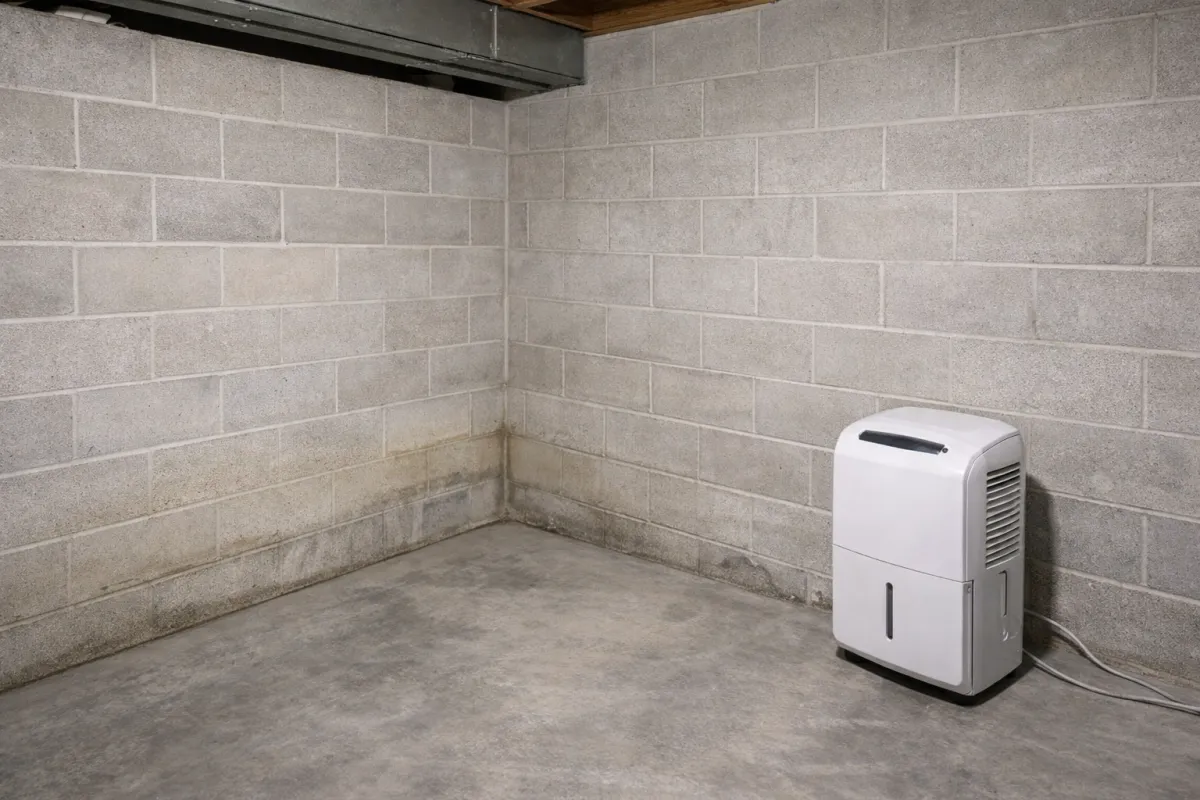
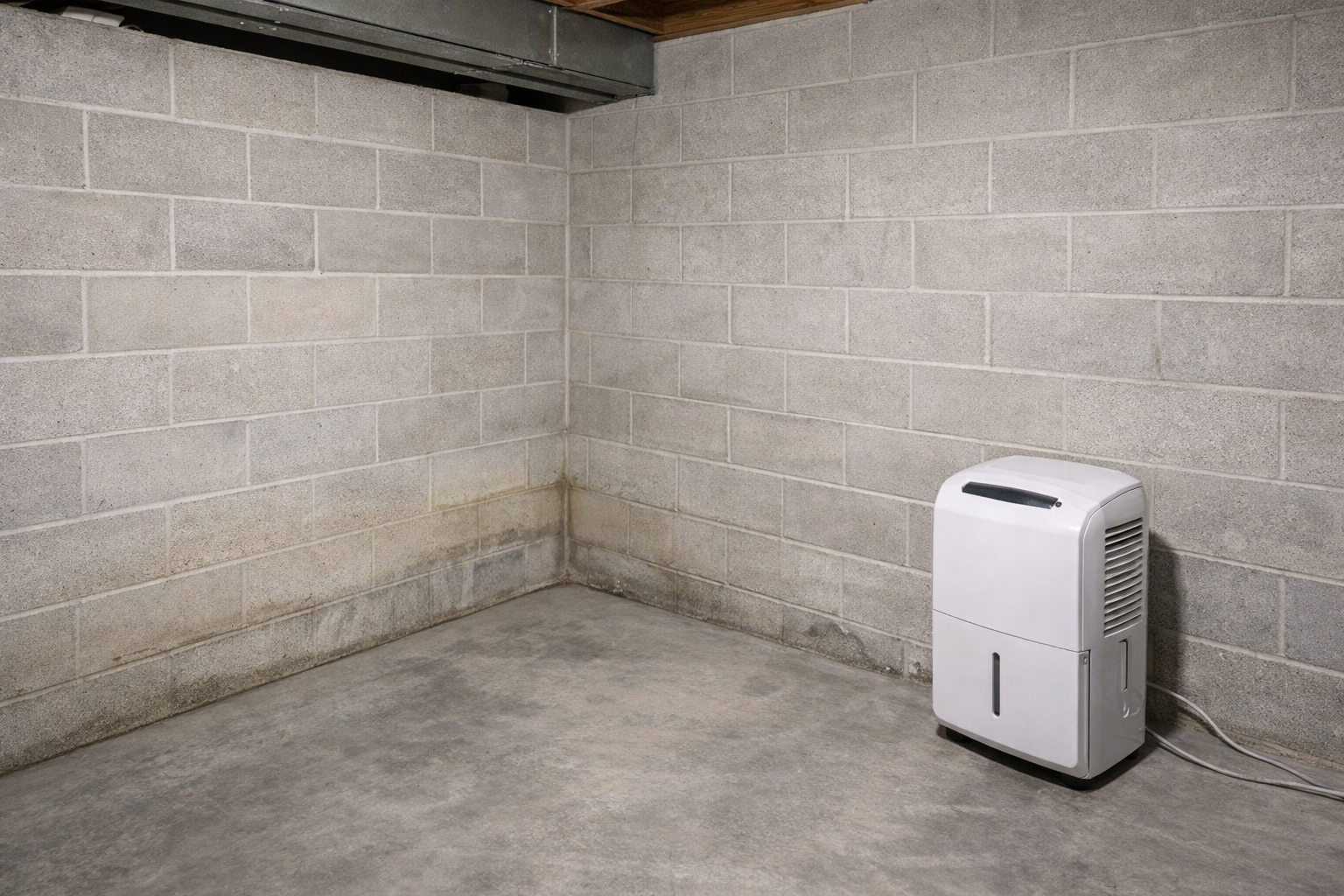
Run a dehumidifier and track humidity (ideal target: ~30–50%).
Look for the source: drains, sump, walls, stored cardboard, damp insulation.
2) Water staining on ceilings or around window corners
What it can indicate: Roof flashing issues, window leaks, or condensation.
What to do:
Photograph the stain and check if it expands after rain.
Don’t just paint it—trace the path and confirm it’s dry.
3) Bubbling paint, warped trim, or soft drywall
What it can indicate: Moisture behind finished surfaces.
What to do:
Gently press (do not poke holes) and note any soft areas.
Investigate above/behind: plumbing, exterior wall penetration, window flashing.
4) Efflorescence on basement walls
What it can indicate: Moisture migrating through masonry (often tied to drainage).
What to do:
Check gutters/downspouts and slope away from the house.
Ensure downspouts discharge far enough away.
5) Condensation on windows, ducts, or exposed pipes
What it can indicate: High indoor humidity, poor ventilation, temperature differences.
What to do:
Use bathroom/kitchen exhaust fans.
Consider insulating cold pipes and improving air circulation.
6) Damp crawlspace smells or “spongy” floors above
What it can indicate: Crawlspace moisture, missing vapor barrier, poor drainage.
What to do:
Check for standing water, wet soil, or torn vapor barrier.
Consider crawlspace encapsulation or vapor barrier improvements (as appropriate).
7) Dark spotting on framing, insulation, or stored items
What it can indicate: Mold growth or staining from moisture.
What to do (safe approach):
Don’t dry-scrub or disturb large areas.
Fix the moisture source first.
For larger/recurring growth, consult a qualified remediation professional.
The “simple plan” to stop moisture problems (and prevent mold)
Identify the source (roof, plumbing, drainage, condensation)
Dry the materials (fans/dehumidifier; replace saturated insulation)
Fix the cause (flashings, plumbing repair, gutter/downspout routing, grading)
Control humidity (ventilation + dehumidification where needed)
Common Central PA moisture sources (fast checklist)
Missing/loose flashing at roof penetrations
Bathroom fan venting into the attic
Gutters overflowing, downspouts dumping at the foundation
Negative grading (soil sloping toward the house)
Unsealed sump discharge or discharge that recirculates back toward the home
FAQ
Is a musty smell always mold?
Not always, but it often signals excess moisture somewhere. Treat it as a clue to investigate.
Should I use bleach?
For small surface areas, homeowners often try cleaners, but the bigger win is stopping moisture so it doesn’t return.
Should I buy a house with moisture issues?
Many moisture problems are fixable—what matters is cause + severity + cost. Document it and get the right evaluation.
CTA (end of post)
If you’re seeing stains, odors, or dampness, don’t guess.
Step 1: Find the moisture source.
Step 2: Document what you see.
Step 3: Fix the cause and control humidity.
And Lastly, call His & Hers Inspections
