Wood-Destroying Insects in Central PA: Why Moisture Intrusion Raises Your Risk (WDI Signs + Prevention)
WDI + Moisture Intrusion (Central PA)

-2025
TL;DR (Quick Answer)
In Central PA, the biggest drivers of WDI risk are wood-to-soil contact and moisture (leaks, damp crawlspaces, poor drainage). If you see mud tubes, frass, pinholes in wood, soft/rotted framing, or swarmers, don’t just treat the insects—fix the moisture intrusion and entry conditions or the problem can return.
Key takeaways
Moisture makes wood easier to damage and makes many WDI conditions worse.
Most infestations start where you can’t easily see: rim joists, sill plates, crawlspaces, basements, and hidden voids.
Prevention is often drainage + ventilation + repairs—not just chemicals.
Wood-Destroying Insects in Central PA: Why Moisture Intrusion Raises Your Risk (WDI Signs + Prevention)
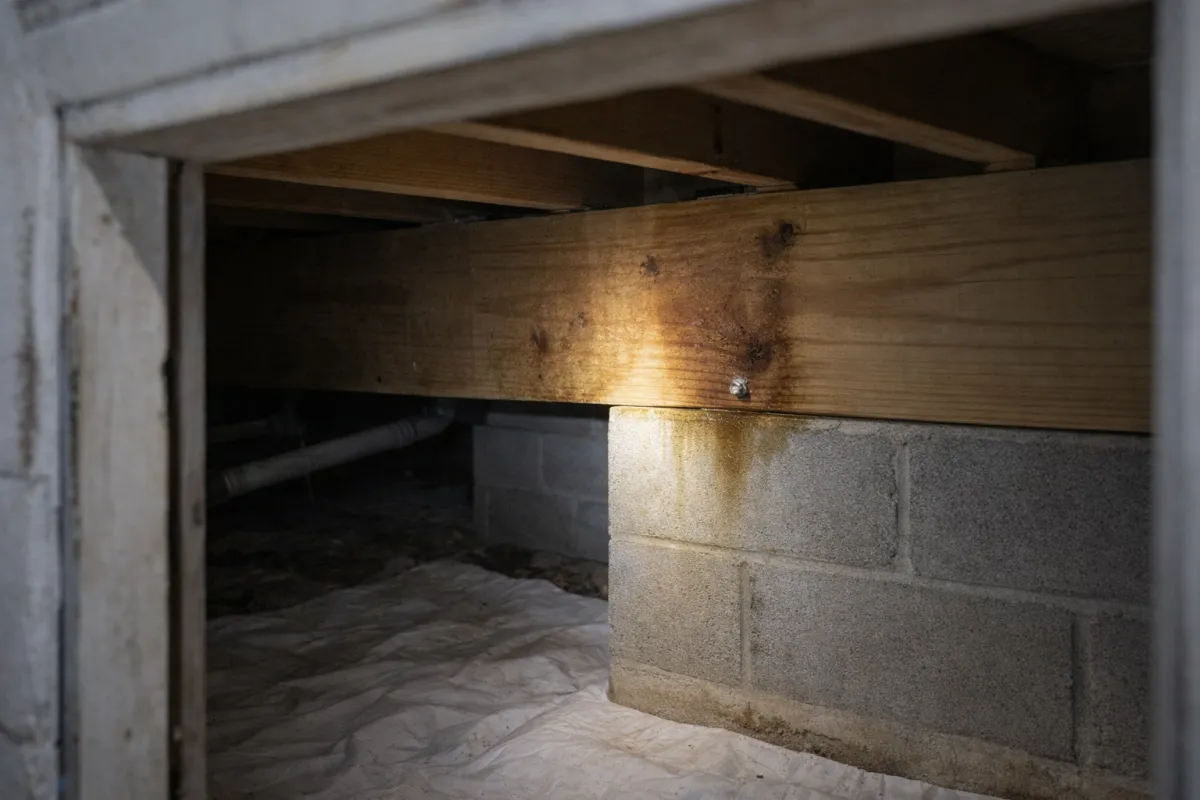
When most people hear “termites,” they picture dramatic damage. But in real homes, WDI issues often start quietly—near damp framing, a wet crawlspace, or a downspout dumping water at the foundation.
If you’re buying or owning a home in Central PA, this is the practical truth:
Moisture problems and WDI problems often travel together.
What counts as WDI?
WDI is a common umbrella term that can include:
Termites
Carpenter ants
Powderpost beetles
Different insects create different evidence, but the same conditions often feed the problem: dampness, hidden access, and untreated wood exposure.
Why moisture intrusion raises WDI risk
Moisture doesn’t “create” insects, but it can:
keep wood damp and softer,
increase decay/rot that insects exploit,
create hidden pathways (soil erosion, voids, wet insulation),
keep areas uninspectable (standing water, heavy storage).
WDI signs homeowners can spot (and what they usually mean)
SignWhat it can meanWhere to lookMud tubesOften associated with termite travel pathsFoundation walls, crawlspace piers, basement edgesFrass (sawdust-like debris)Common with carpenter ants or some beetlesBelow windows, baseboards, in crawlspacesSwarmers / discarded wingsReproductive activity (timing varies)Window sills, near lights, basement windowsPinholes in woodPowderpost beetle activity (sometimes old)Joists, beams, unfinished woodSoft/crumbly woodRot and/or insect damageSills, rim joists, around plumbing penetrations
Moisture + WDI hot spots (where problems usually hide)
Rim joists and sill plates (especially near grading/drainage issues)
Crawlspaces with torn/missing vapor barrier
Basements with persistent dampness or efflorescence
Deck ledgers and exterior wood-to-soil contact
Areas around hose bibs, bathrooms, and kitchens (plumbing leaks)
Prevention that actually works (simple checklist)
Moisture control
Extend downspouts away from the foundation
Keep gutters clean and flowing
Confirm grading slopes away from the home
Address plumbing leaks quickly
Use ventilation/dehumidification where needed
Reduce insect access
Avoid wood-to-soil contact (including siding clearance)
Store firewood away from the house
Keep mulch from piling against siding
Repair damaged exterior trim and flashing
What to do if you suspect WDI
Document evidence (photos of tubes, frass, wings, damaged wood)
Don’t disturb more than necessary (especially mud tubes)
Correct moisture conditions immediately
Contact a qualified pest/WDI professional for identification and treatment
If buying a home, request appropriate WDI documentation and negotiate repairs/credits where warranted
FAQ
Is wood rot the same as termite damage?
No. Rot is typically a moisture/decay issue; termites are insects. But they can coexist because moisture conditions often overlap.
If I treat termites, do I still need to fix moisture?
Yes—moisture and access conditions can keep the property vulnerable.
Are carpenter ants always a “structural” problem?
Not always, but they can signal moisture-damaged wood nearby. Identification matters.
CTA (end of post)
Moisture is the common thread.
Step 1: Control water and humidity.
Step 2: Identify the insect and the damage.
Step 3: Repair conditions so it doesn’t return.
CALL His & Hers Inspections TODAY!!!
